
Three Play-Guide drills I use: a rubber-band reload, a mute-and-subtitles read, and a stopwatch heal-tax test.
The rubber-band reload drill (for shaky hands)
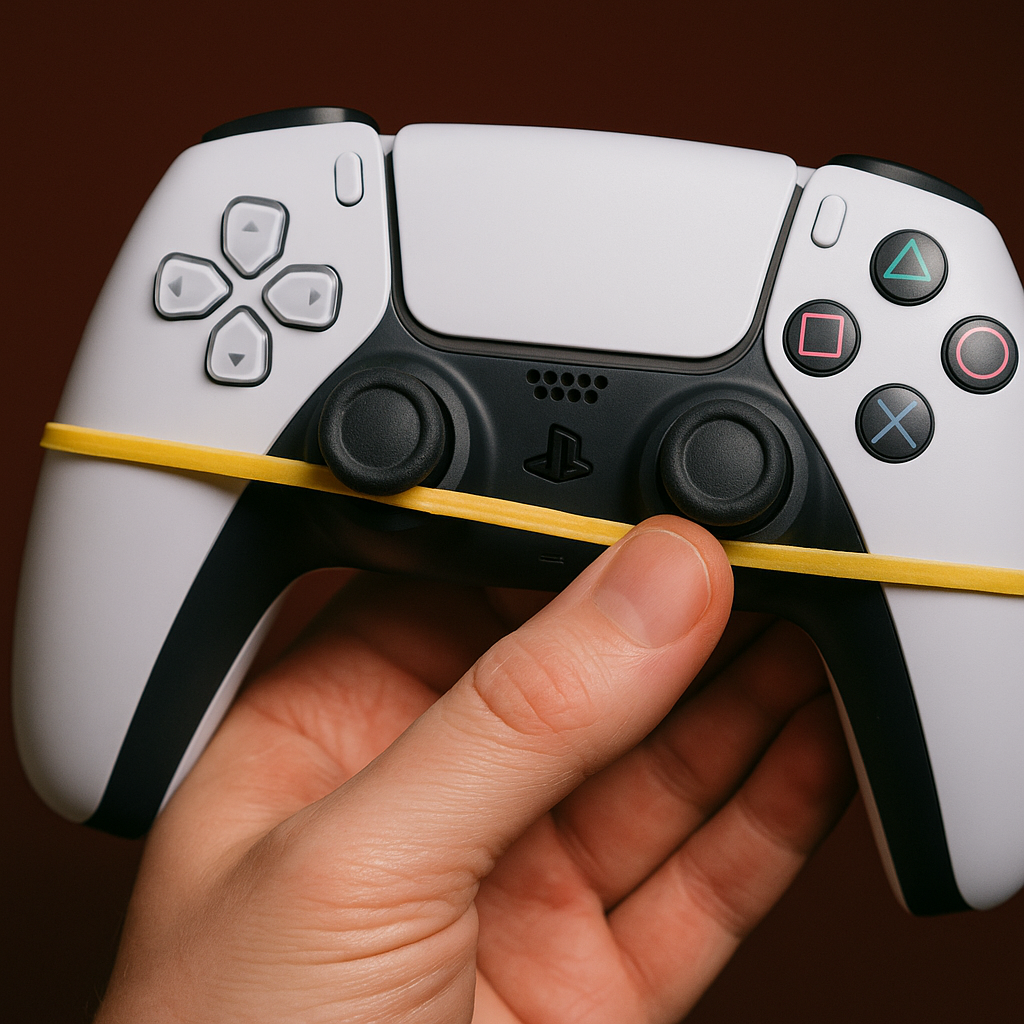
I started doing this on a night I was dying to the same dumb mistake: I would reload the second I heard a boss exhale, then eat a full combo with my hands locked in the animation. So I built a Play Guides drill that makes the mistake physically annoying. Wrap a rubber band around your controller so it lightly resists the button you keep fat-fingering (for me it was Square/X for reload, but it can be anything: a spell cast, a dodge, a weapon swap). You are not trying to keep it from working, just forcing a tiny bit of deliberate pressure so your thumb has to commit.
Now load into a safe spot with a predictable enemy (a hallway grunt, a training dummy, a low-stakes patrol). Set a timer for 8 minutes. The only rule: you can only reload after you do a micro-check, out loud, every single time: "Space, stamina, sightline." If any part is missing, you don't reload. I know it sounds corny. It also works, because your brain hates saying the words and pressing through the rubber band if it isn't warranted.
Here are the reps I run, in order:
- Minute 1 to 2: reload only behind cover, even if you're at 2 rounds.
- Minute 3 to 5: reload only after a knockdown or a stagger (your "free turn").
- Minute 6 to 8: reload only when you can see the enemy's hands (if you can't see hands, you can't read the swing).
By the end, the rubber band has done its job: your thumb stops auto-firing the reload impulse the instant stress hits. And when you take it off, your inputs feel almost comically clean, like you just swapped to a fresh mechanical keyboard. This isn't a build guide. It's a habit swap you can feel in your hands. I keep a couple rubber bands in the same little drawer as my spare AA batteries for the Xbox controller, because that's the level of "gear" this one needs.
Mute the game and win the subtitle fight
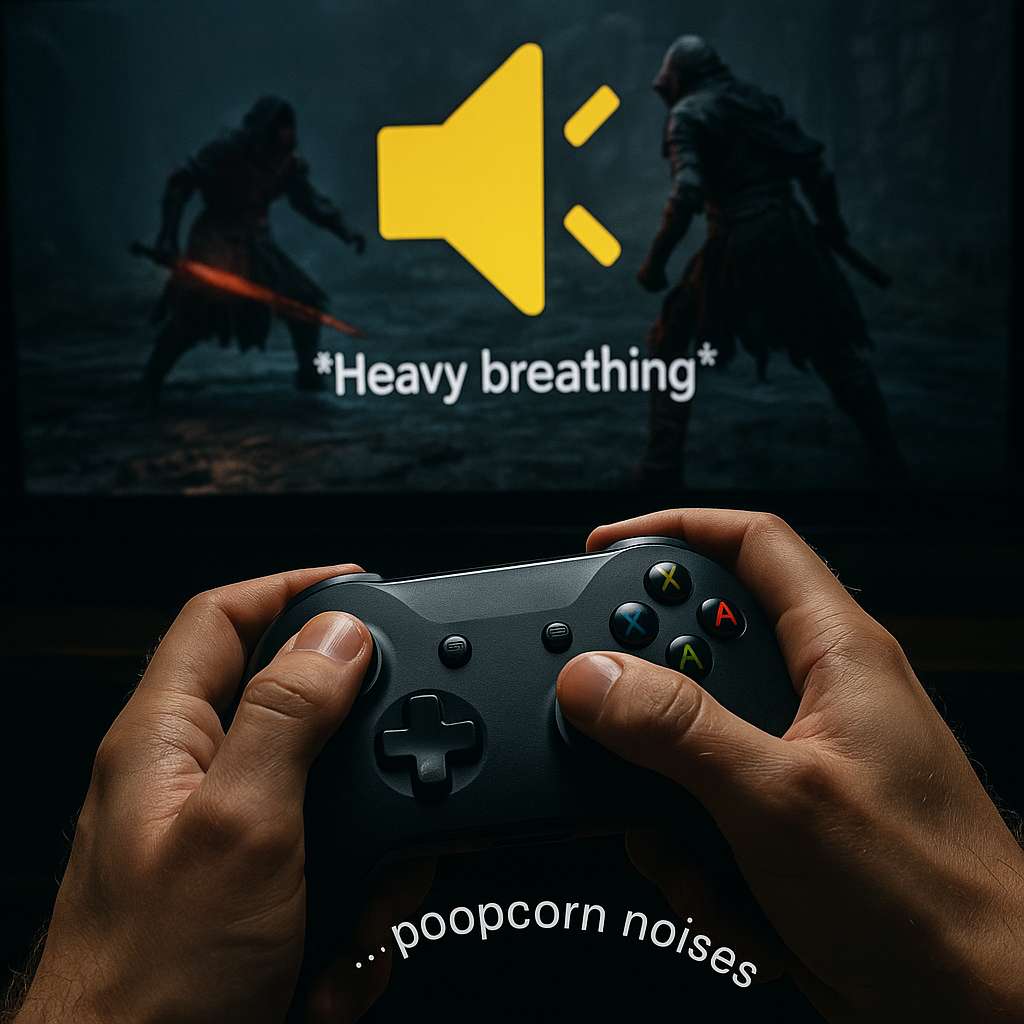
This one feels wrong until you do it. When I'm stuck on a fight with a lot of audio bait (the huge inhale, the "now" voice line, the metallic jingle that makes you flinch), I mute the game completely for 3 to 5 attempts and turn subtitles on. Not because I need to read dialogue. Because the subtitle timing is usually tied to the move trigger, and it gives you a clean, repeatable cue without the adrenaline spike that sound creates.
Here's how I set it up like a Play Guide instead of a vague tip. Before you mute, do one normal attempt and write down the three audio moments you react to too early. Example: "growl means sweep," "clang means grab," "chant means AoE." Now mute everything: TV volume down, headset off, whatever it takes so you can't cheat. Keep SFX captions on if the game supports it. (A lot of modern titles have accessibility captions that literally print "[Heavy footsteps approaching]" or "[Weapon charging]" and that's the gold.)
On each muted attempt, your job isn't "win." It's to spot the first visual tell that happens before the subtitle line hits. You end up noticing stuff you never saw with audio on: the shoulder drop, the foot angle, the weapon tip twitch, the half-step that always precedes the lunge. The funniest part is how loud your own controller becomes when the game is silent. You hear your thumb mashing. You hear your triggers bottoming out. It's hard to pretend you're calm when your inputs are making popcorn noises.
After those muted pulls, I bring sound back at 30 to 40% volume for a few tries. Not full. Full volume drags me right back into flinch-town. With sound lower, the cue becomes "nice to have" instead of "I must react now." The fight doesn't get easier. You get less jumpy, and the whole thing starts to look slower. If you're the kind of player who always says, "I swear I pressed dodge," this drill helps too, because you can finally watch your character and the enemy at the same time instead of listening for a panic bell.
Time your heals like a speedrunner, not a hero
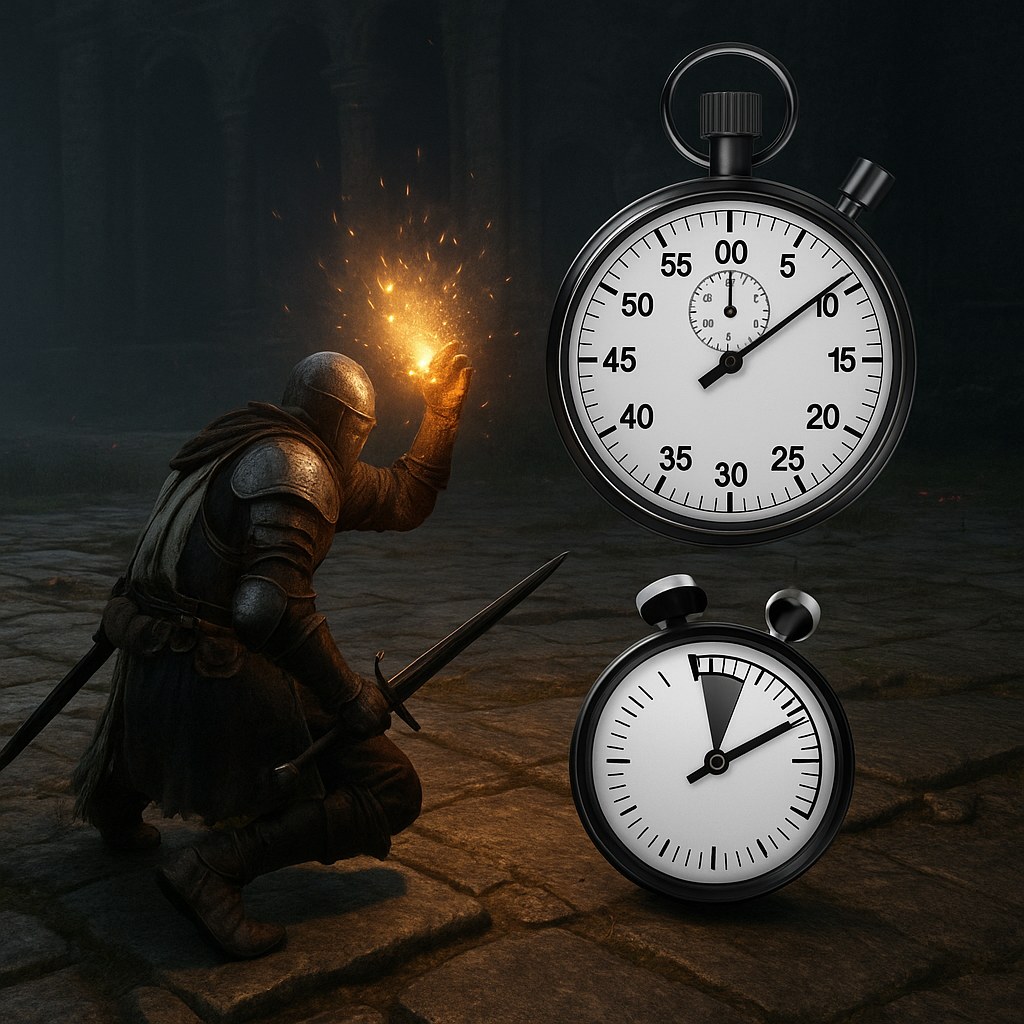
I used to heal based on vibes. You know the vibe: "I think I'm far enough," hit the flask, instantly get tagged by a projectile you forgot existed, then you spend the next 30 seconds angry-healing and burning resources like you're trying to erase the last mistake. The Play Guides fix is boring in the best way. You put a number on the heal tax.
Grab your phone's stopwatch. Go to the boss or enemy that keeps punishing heals. Stand at the distance you usually heal from. Start the stopwatch the instant you press the heal button. Stop it when you regain control (when you can roll, block, sprint, whatever your game allows). Do it five times. You'll get a tight cluster like 1.4 seconds, 1.5 seconds, 1.5 seconds. That's your heal lock. Now do the same thing for your fastest "get out" option: a backstep, a roll, a sprint start. Time from input to you being meaningfully moved. You're building a tiny timing profile for your own character, not a wiki entry.
Once you have those numbers, set up a simple test inside the fight:
- Only heal after a move with a known recovery. If the boss has a slam that leaves the weapon stuck in the floor, that's a candidate.
- Count one beat longer than your heal lock. If your heal lock is about 1.5 seconds, you wait a clean "one-and-two" after the slam lands, then heal.
- Heal at an angle, not straight back. Straight back is where a lot of tracking projectiles and gap-closers live. Angle-left or angle-right forces re-aim.
Two little notes from doing this across a bunch of games. First, your "safe" heal spot is often closer than you think, but only if you're off the boss' centerline. Second, panic heals usually happen because you're trying to heal and create space at the same time. This drill separates them. Make space first (timed), then heal (timed). It feels slower. Your attempts last longer. And you stop doing that thing where you enter phase two with zero heals and a grudge.