
Draw three lines after every wipe, and your next pull stops feeling like guesswork.
Make a two-minute paper death map
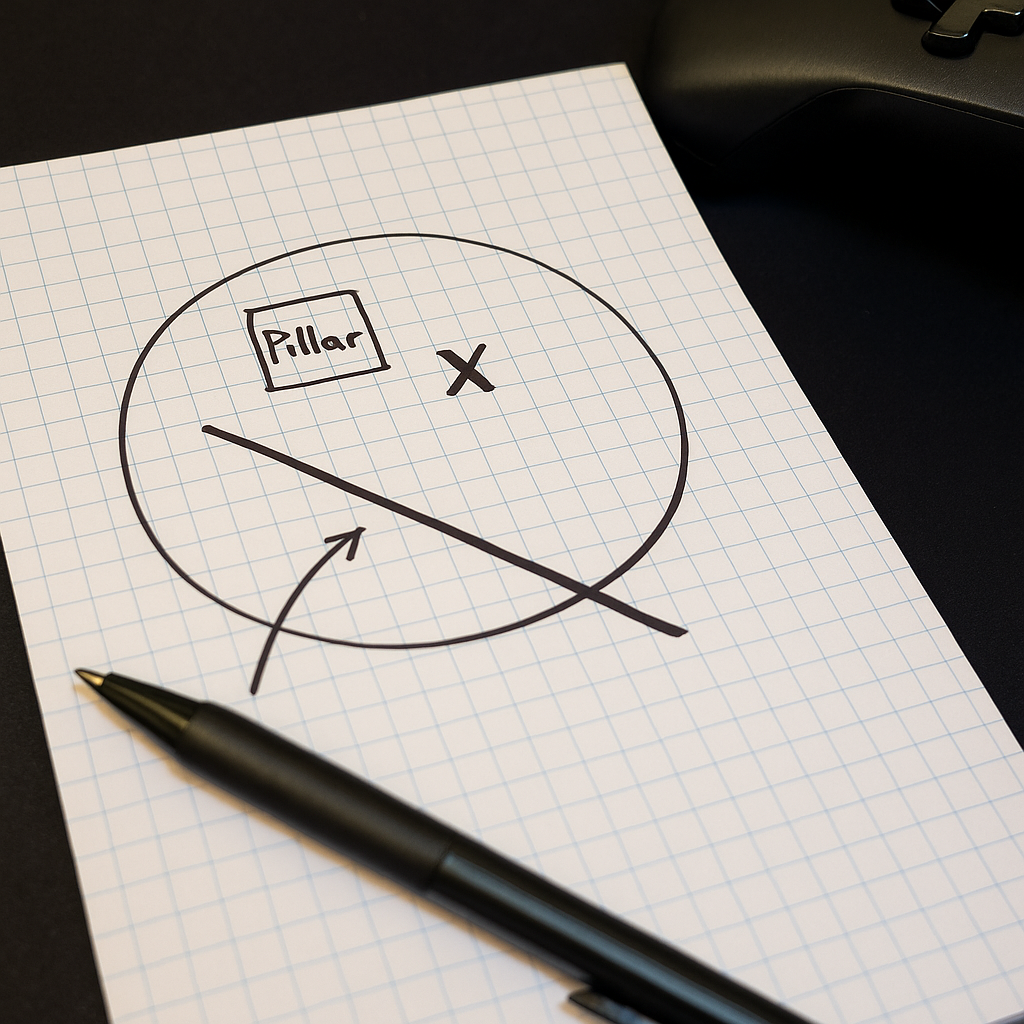
I keep a cheap graph pad next to my keyboard for one reason: boss arenas lie to your memory. After a wipe, you think you died "over there" or "kind of near the statue," then the next pull you stand in the same bad spot and act surprised when the floor deletes you again. So I do the unglamorous thing and draw it. Not art. Not a diagram for the Discord. Just a quick map I can glance at between pulls.
Here is the whole routine: I draw the arena outline in 10 seconds (circle, rectangle, whatever), then I mark three things with three different pen strokes.
- X = where I died (or where the death spiral started).
- Arrow = where I thought I was going (the panic roll path counts).
- Thick line = the boss's "nope" zone (the sweep, the puddle edge, the charge lane).
That is it. When I have two or three pulls on the page, patterns show up fast. Maybe I always die on the same clockwise drift when my camera swings wide, or I keep backing into a wall and losing the dodge angle. This is Game Tips in its simplest form: externalize the fight so your brain stops freelancing. I like paper because it sits in my peripheral vision next to my pull timer and notes app, and I can scribble with one hand while my other hand is still annoyed at the controller.
One extra trick: I label one landmark the game already gives you (a pillar, a brazier, a broken cart). Not a generic "north." A thing you can see through spell effects and motion blur. Next pull, I walk in and anchor myself to that landmark on purpose. It sounds overly fussy until you do it once and realize you just bought yourself ten clean seconds at the start of every attempt.
Force your dodge to fail in practice, not on the pull
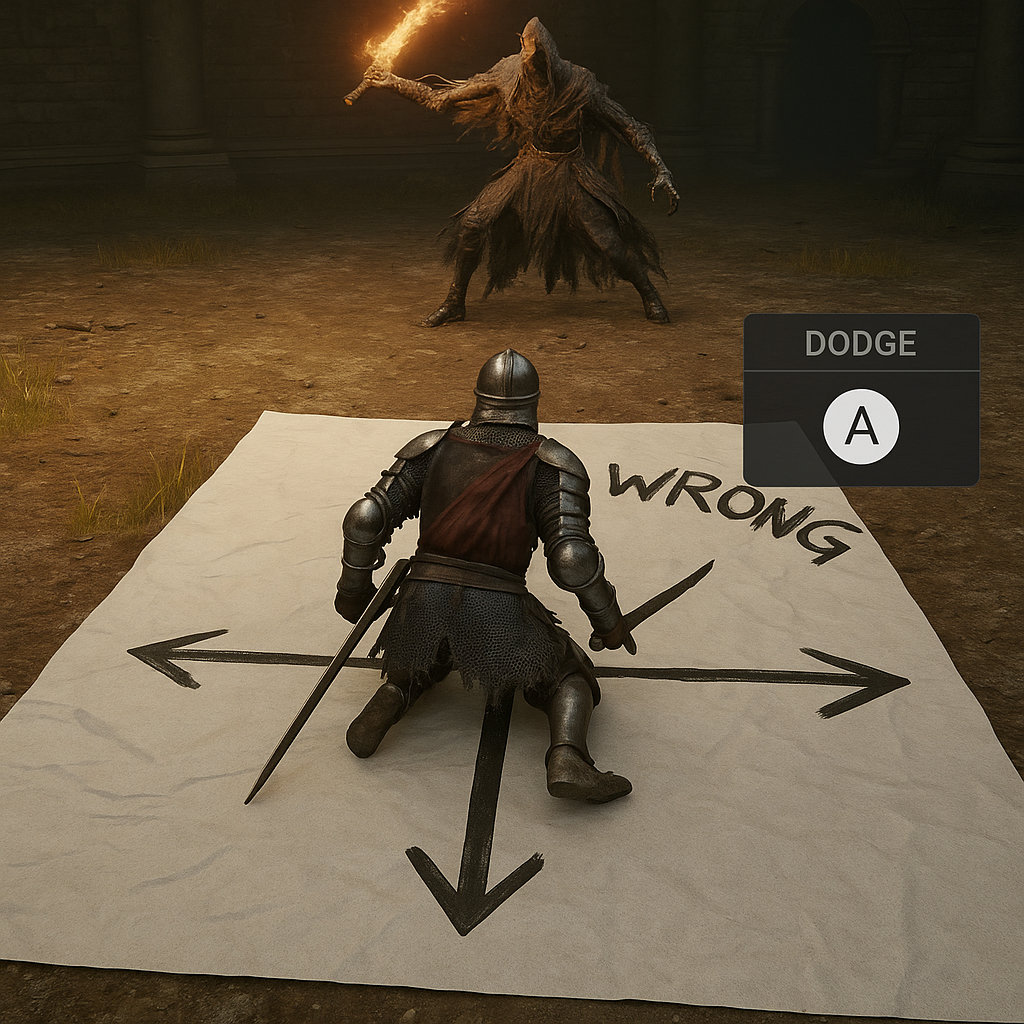
Most of my "I swear I pressed it" deaths aren't timing. They're direction. I dodge the right moment but the wrong way because my left stick is doing a tiny panic wobble, or my camera is half a second behind, or I'm hugging the boss and the game decides my roll should politely slide along its shin. So I practice the part that feels dumb: I deliberately make the dodge fail until I understand the failure.
Load into the arena (or a nearby enemy with a clean, readable swing) and do 10 reps where you only dodge late on purpose. Not to win. To see what your late dodge looks like. Then do 10 reps where you dodge early on purpose. Then do 10 where you dodge the correct timing but vary the direction: straight back, left, right, and forward through. You'll notice something immediately: one of those directions is "sticky" in your hands. For me it's almost always back roll, because it feels safe, and it gets me clipped by delayed hitboxes more than I'd like to admit.
Now add the Game Tips layer: change one variable and keep everything else the same. Same distance, same camera position, same starting foot. You're not training reflexes, you're training a repeatable input. If you play on controller, watch your thumb. If you tend to ride the stick edge, try a softer angle. If you're on mouse and keyboard, pay attention to your strafe keys. A lot of players accidentally dodge diagonally because they're still holding A or D from repositioning.
I also like to turn on an input display if the game supports it, or use a lightweight overlay if I'm on PC. Not because I want a forensic report, but because it ends the argument in my head. Did I press dodge? Yes. Did I also keep holding backward? Also yes. Once you can see the mistake, you stop treating it like bad luck and start treating it like a controllable habit. After that, when the boss does the same tell, your hands already know the one dodge direction that doesn't get you scooped off the floor.
Upgrade your audio mix for one specific tell
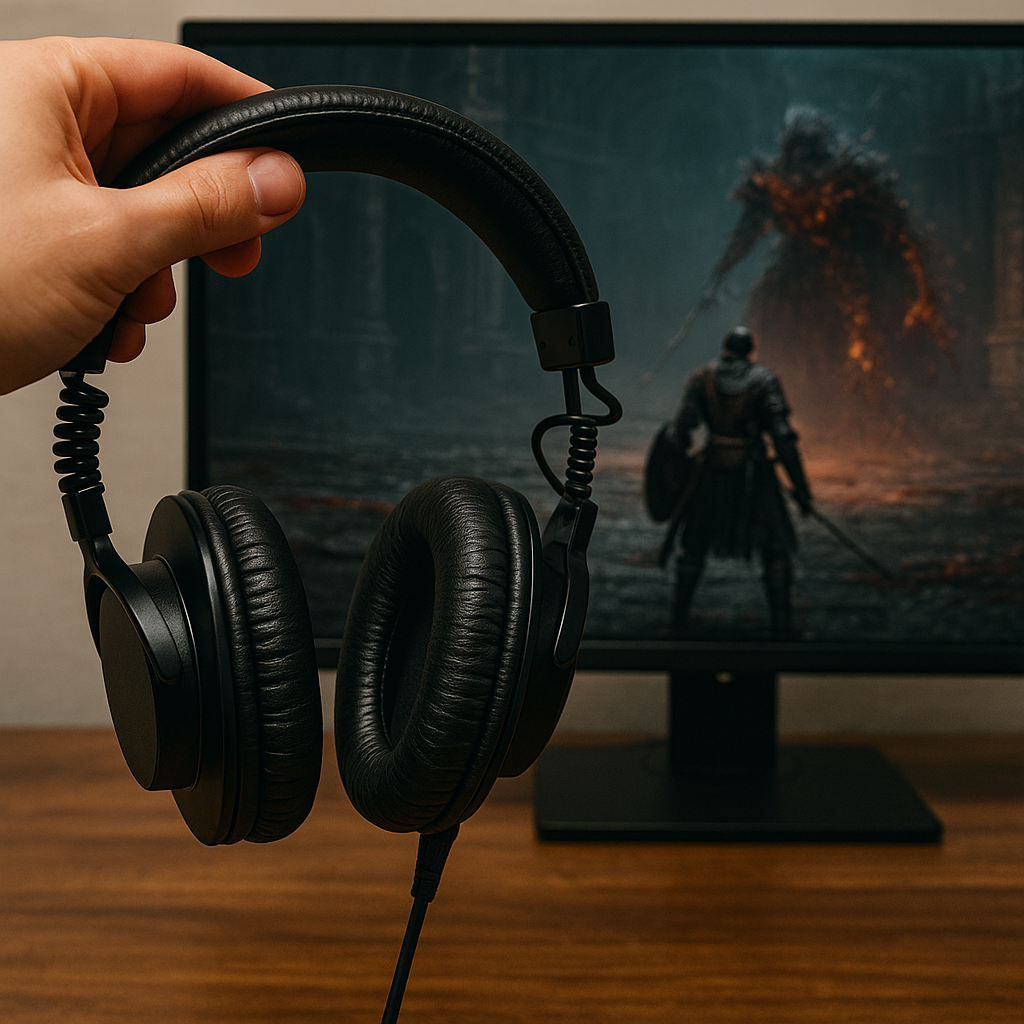
Everybody says "listen for the audio cue" like that's free information. It isn't, not with Discord in one ear, a podcast paused-but-not-closed, and the game's mix set up for cinematic vibes instead of survival. When I'm stuck on a boss, I pick one tell that keeps tagging me and I tune my whole setup around hearing it clearly, the same way I'd tune a headset mic for a raid call.
First, I decide what I'm listening for. Not "the boss sound," but the specific thing. The inhale before a grab. The metallic click before a lunge. The little whoosh that happens on phase change. You only need one. If you try to "hear everything," you hear nothing.
Then I do three practical tweaks that live squarely in Game Tips land:
- Headphones over speakers for attempts. Even mid-range cans (I use a beat-up pair of Sony MDR-7506) isolate the cue better than a nice soundbar that bounces off your room.
- Lower music to 20 to 40 and lower voice a bit if it masks the cue. Keep SFX high. This isn't about immersion, it's about signal.
- Turn off extra processing if it smears transients. Spatial audio can be awesome, but some games + drivers make sharp cues feel mushy. If you're on PC, check Windows Sonic/Dolby Atmos settings and try one pull with it off.
Now the hands-on part: I stand in the arena and trigger the move on purpose. Bait it. Block it. Die to it if I have to. I want to hear the cue three times in a row without the adrenaline of "this is the run." Once it locks in, it's like you gained a fraction of a second of reaction time without changing your reflexes at all. You're moving on sound, not on the moment the animation becomes obvious through particle effects.
Small note that surprised me the first time I did this: raising the SFX volume can make the cue harder to hear if the game layers too many impact sounds. If that happens, back SFX down a notch and bring your master volume up instead. You're hunting clarity, not loud. When the cue finally cuts through, you stop eating that same hit for an hour and start dying to something new, which is the most honest sign of progress.