
Three discovery habits that catch fake walls, misaligned props, and unmarked climbs without touching the minimap.
Jump into every corner like a terrible guest
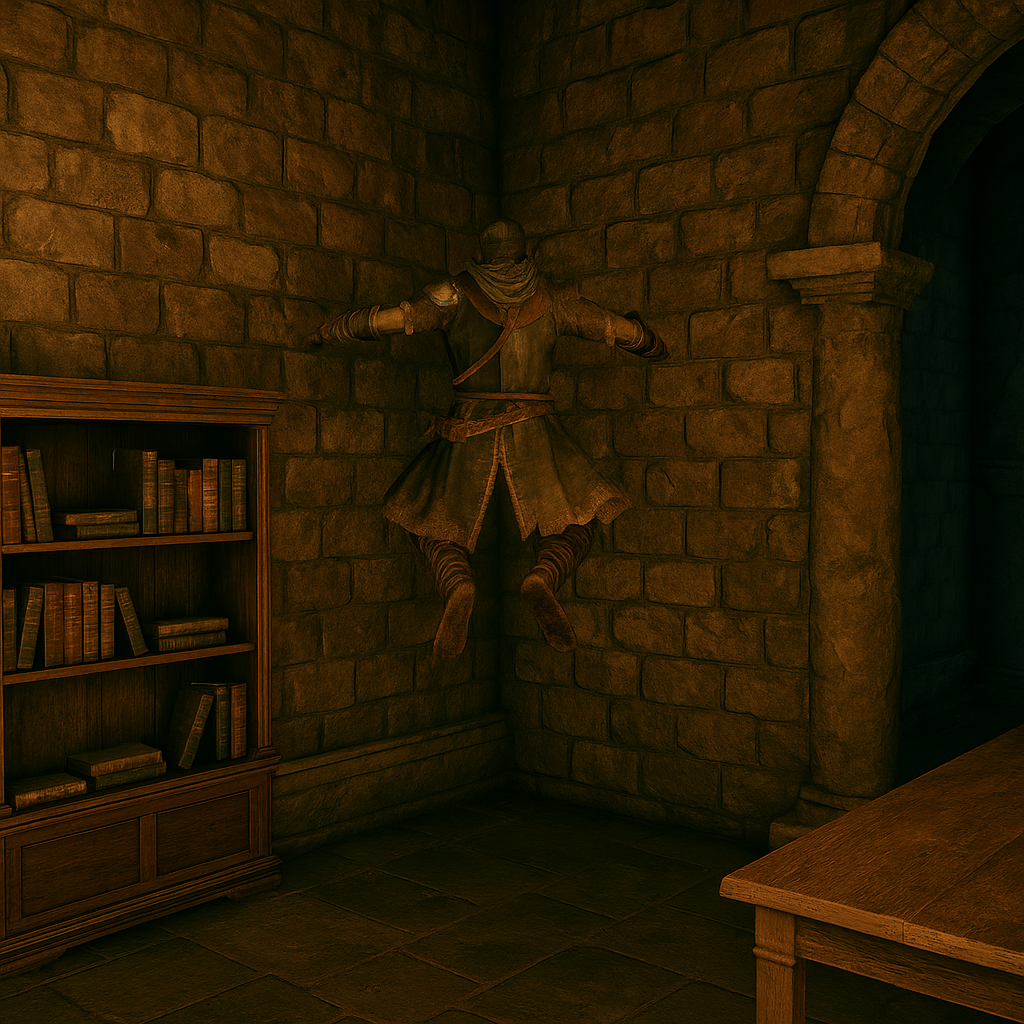
I started doing this after missing the same kind of hidden nook in three different games: a tiny wedge behind a pillar, a half-stair you can mantle, a crack you only notice when the camera gets weird. Now, whenever I enter a new room and the main path is obvious, I do one lap that looks dumb on stream: I jump. Not platforming-jump. Just a couple hops into corners, up against bookcases, beside broken arches, right where the lighting gets mushy. It sounds like superstition until you watch what the game does with your body and camera.
Discovery games leak information through collision and camera behavior. If you jump into a dead corner and your character does that tiny step-up animation (the one that feels like your boots caught a curb), there is often a climbable lip that isn't highlighted. If the camera pulls in tight, or clips through a wall for a split second, that wall is frequently thinner than the rest of the room. Thin walls are where designers hide bonus rooms, crawlspaces, and those little loot alcoves that never get a quest marker. And if your jump thuds like you hit a soft curtain instead of stone, pay attention. Some engines literally swap the sound set on disguised entrances, especially in older remasters.
I keep it quick so it doesn't turn into a compulsion. Pick four spots: the darkest corner, the corner with the most props, the corner closest to the exit, and the one that seems pointless. Two hops each. While you're doing it, watch for three tells: a mantle prompt that flashes for half a second, a camera nudge like it's trying to show you something, and any object that has more clearance behind it than it needs. The last one is my favorite: a waist-high shelf pulled three inches off the wall for no reason. Nobody does that in a normal room. Level designers do.
Hunt for the one prop that's a different century
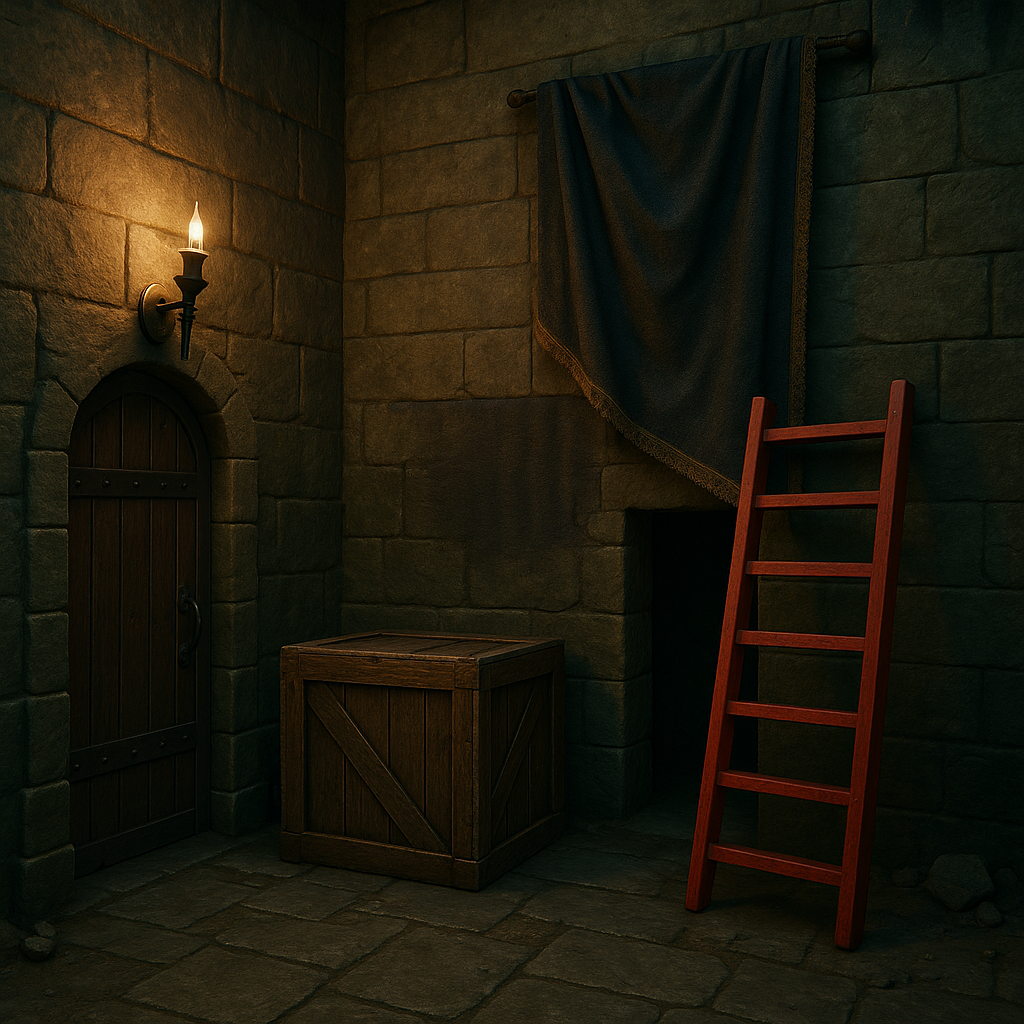
When I'm in pure discovery mode, I stop thinking about "where would I hide loot" and start thinking like an overworked environment artist who had to kitbash a room at 2 a.m. Most secret routes are not hidden by darkness. They're hidden by sameness. So I look for the one thing in the room that doesn't match the set dressing rules the rest of the zone has been following.
Every area has a visual grammar. Maybe it's all brass fixtures and greenish stone. Maybe it's a sci-fi corridor where every panel has the same screws and chamfers. Then you walk into a side chamber and there's one wooden crate with a different paint shader, or a banner that's oddly crisp, or a stack of books that's suspiciously low-poly compared to everything else. That's the tell. Not because the game is "cheap," but because interactive or movable props often come from a different asset bundle. They were built to be pushed, opened, burned, rotated, scanned, or exploded, so they carry slightly different wear, slightly different specular shine, slightly different collision padding.
Here's how I do it without turning into a pixel peeper: I pick one category and scan for it fast. Doors, drapes, crates, wall sconces, vents, rubble piles. If everything is consistent except one item, I walk straight to it and do the boring stuff: circle it, press interact, bump it, and check behind it. In games with physics, I try to wedge myself between it and the wall to see if there's an invisible gap. In games with a dedicated "inspect" or "focus" button, I tap it and watch what gets outlined. Sometimes the outline pops on the wall behind the prop instead of the prop itself, which is basically the game whispering, "Yes, you're close."
This catches a lot of the secrets that never show up on maps: crawl holes hidden behind a tapestry that has a cleaner edge than the other tapestries, a vent cover that uses a different bolt pattern, a "random" cabinet that is the only one with actual handles. My personal favorite is the ladder that's the wrong color. If the whole level has rusty iron ladders and you find a ladder with fresh paint, that ladder is going somewhere.
The two-pass room: first for flow, second for glitches
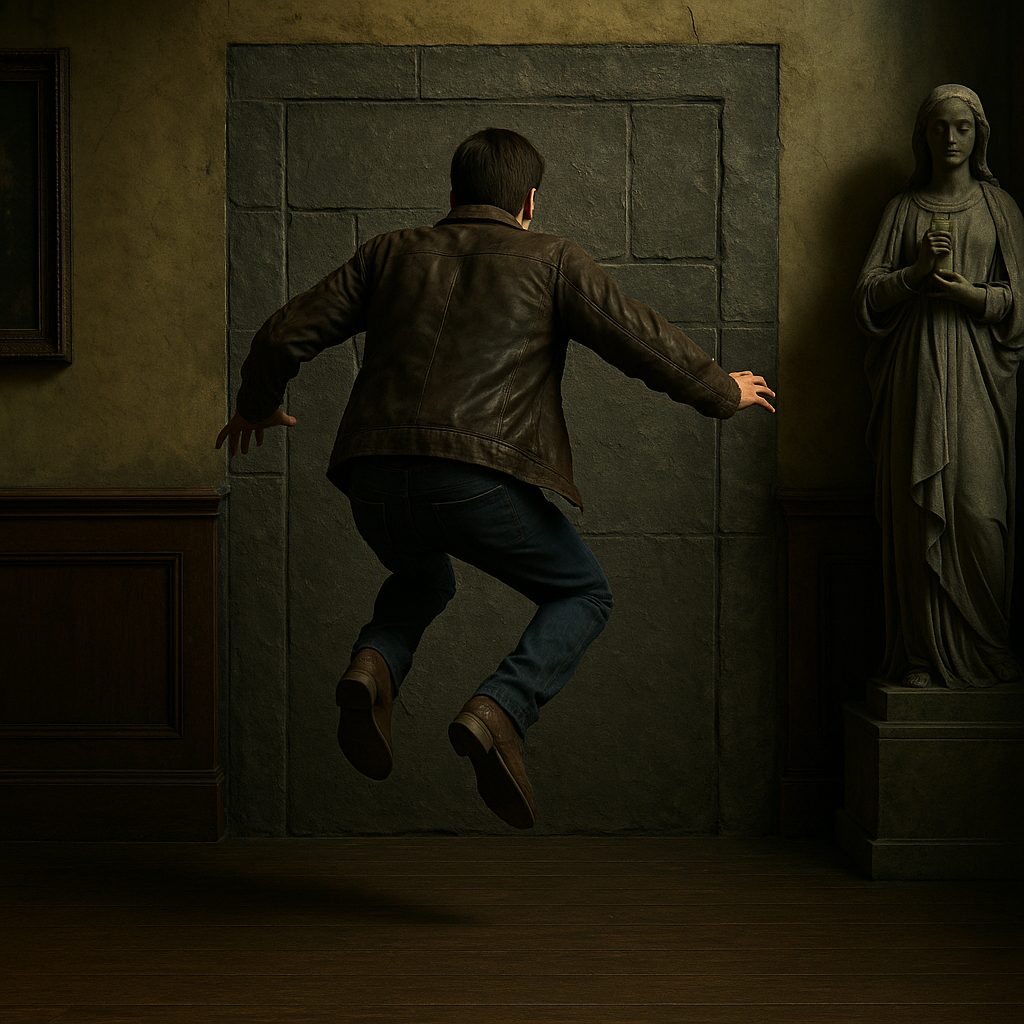
I don't full-clear a space the moment I enter it anymore. That habit made me miss stuff because my brain was busy doing "chores" (open chest, smash barrel, check desk) instead of reading the room. Now I do two passes, and the second pass is specifically for discovery tells: the little seams, the pathing oddities, the places the camera feels protective.
Pass one is for flow. I walk the obvious route like I mean it. I note where the game wants me to go, where it keeps my eyes, and where it tries to block me with a waist-high railing that looks decorative but is clearly there to say "not yet." I don't touch everything. I just let the layout register. On this pass I also listen for the ambient shifts that usually accompany thresholds: the reverb changes, the wind noise drops, the music stem swaps. Those audio edges often line up with hidden door volumes and secret trigger zones, even if the entrance isn't in your face.
Pass two is slower and meaner. I backtrack the exact same route, but now I'm watching for things that only feel wrong when you know the intended path. A hallway that is too wide for its purpose. A staircase that dead-ends with a camera angle that politely refuses to look up. A room that has a perfectly centered statue (centered props are suspicious) with just enough clearance behind it to squeeze a character model. I also pay attention to micro-stutters: a tiny hitch when you step on one tile, a half-second of texture pop-in when you face a blank wall. Those are streaming boundaries, and secret spaces love to sit behind streaming boundaries because they can be loaded separately.
One practical trick: on the second pass, I keep my camera slightly lower than normal and pan along the baseboards, floor trim, and the bottom edges of walls. In a lot of games, the top of a disguised doorway is hard to spot because lighting is doing too much. The bottom edge is where you see the seam, or where dust decals stop too cleanly. If the grime on the floor abruptly ends in a perfect rectangle, I don't care how "solid" the wall looks, I'm checking it. This is discovery work, not vibes.